Progress Updates
Broad updates over the past week:
- Managed to get the Apple IIgs connected to the Internet
- Read several articles and a book
- Scheduled several office hours with faculty and residents
Connecting the Apple II
After two months of worth I finally achieved my goal of connecting a 40 year old computer to the internet. Over the week I continued iterating on my test network link driver. The first win was having the driver appear in a list of network connection options. (Except after selecting the option the operating system and computer would freeze). Fixing the errors involved finding source code for the networking software and comparing existing network connect in order to identify why my assembly code was causing the computer to crash.
The BlueSCSI device (the modern custom PCB allowing SD card storage and networking) was also having trouble connecting to the sandbox370 WiFi so I used network sharing from my Mac in addition to testing on my phone’s hotspot. Eventually, I had a version that was not crashing the computer, and supposedly was connected to WiFi though there was no way to know for sure without a test application.
So I wrote a test application. The program would ping my laptop and my laptop would ping back to test the data packet send and receive rates. The first several iterations both worked and didn’t. The Apple II was not able to communicate with my Mac, but my Mac was able to send data to the Apple II with an 80% loss rate. After several iterations I realized the problem was due to my WiFi network. After connecting the BlueSCSI to my phone’s hotspot the data loss rate dropped to 0-10% which is in the margin of error even for modern devices. The vintage computer can now be actually connected to a modern WiFi network and given an IP address to be readable by modern computers.
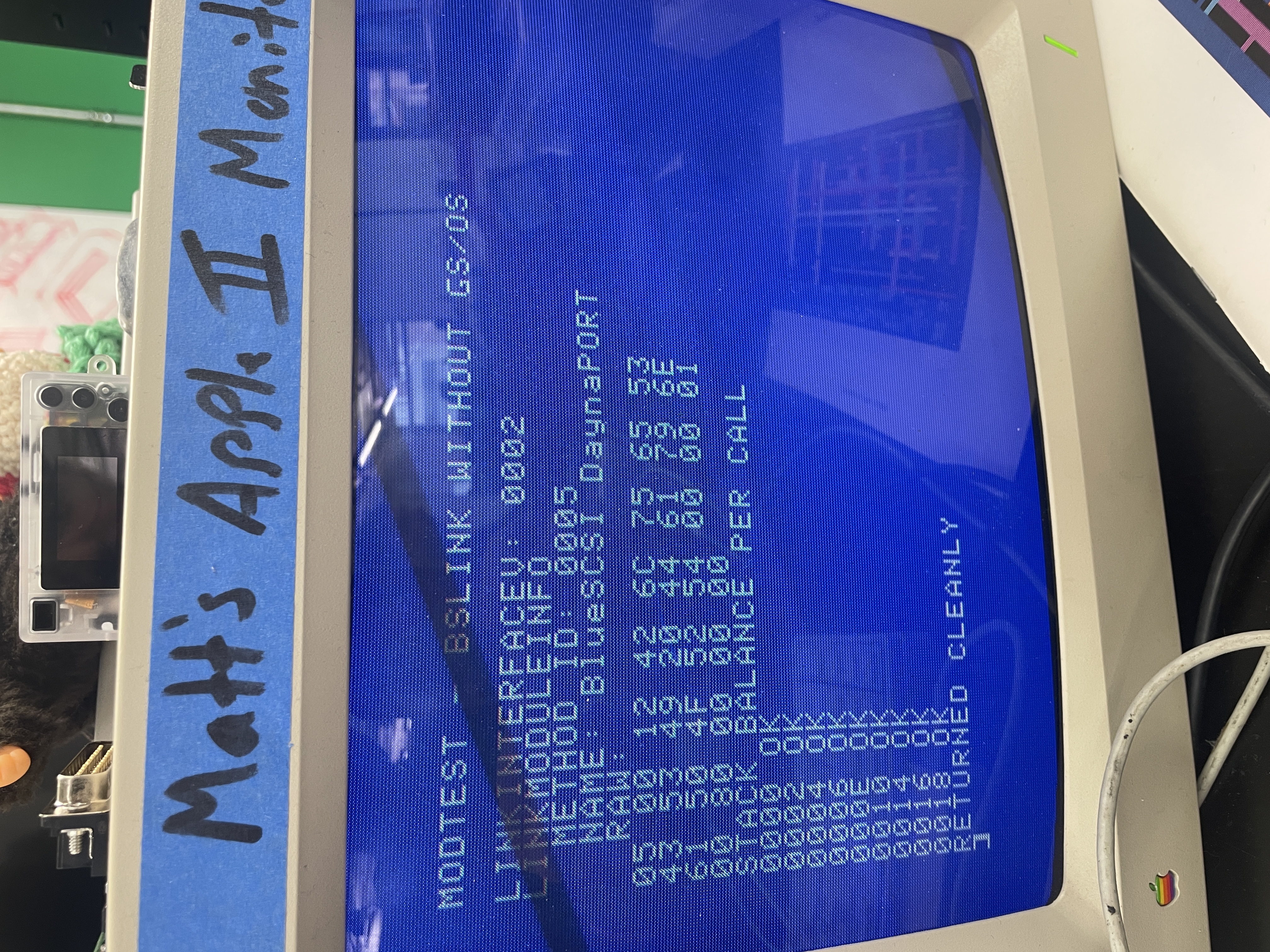
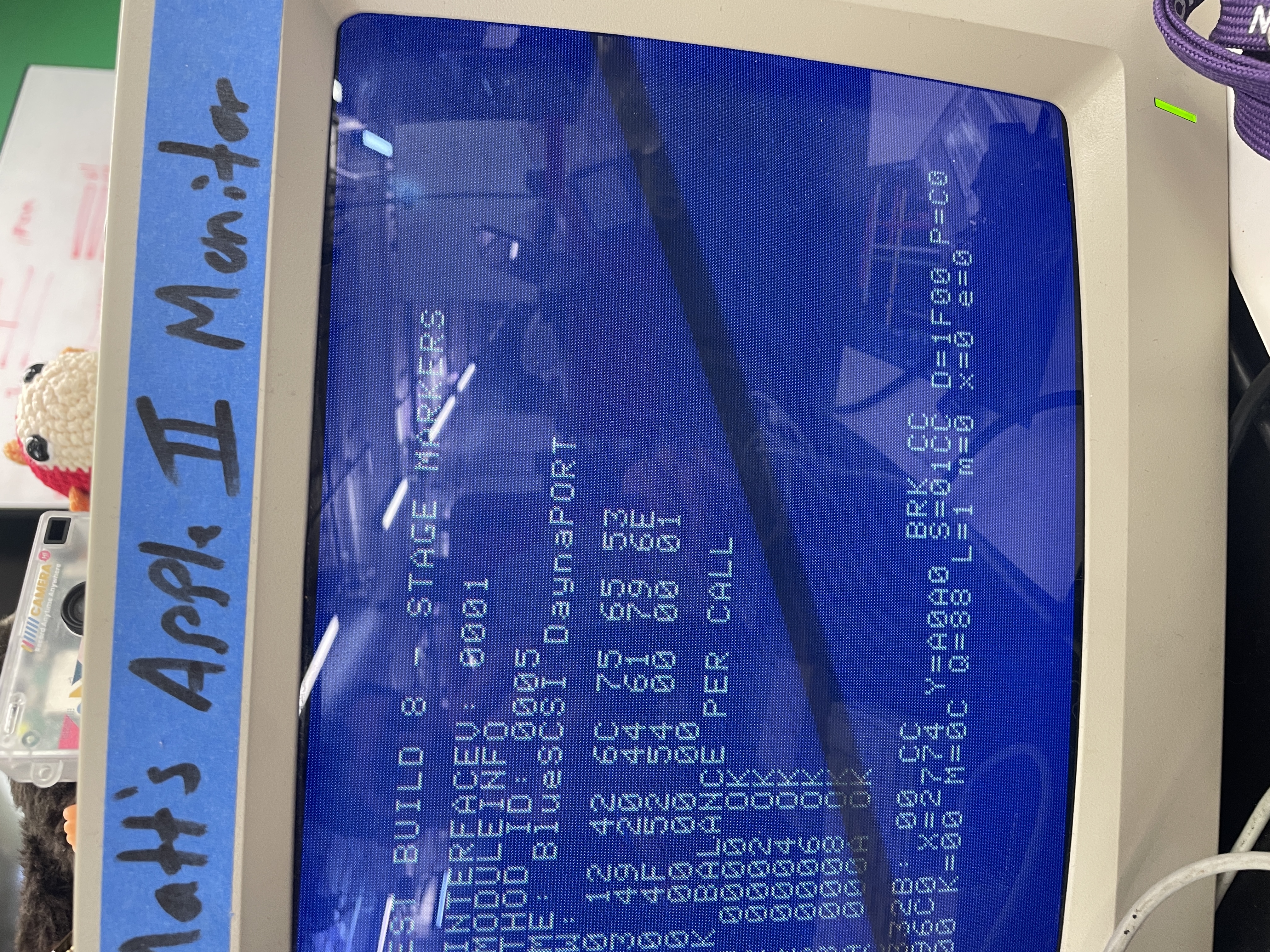
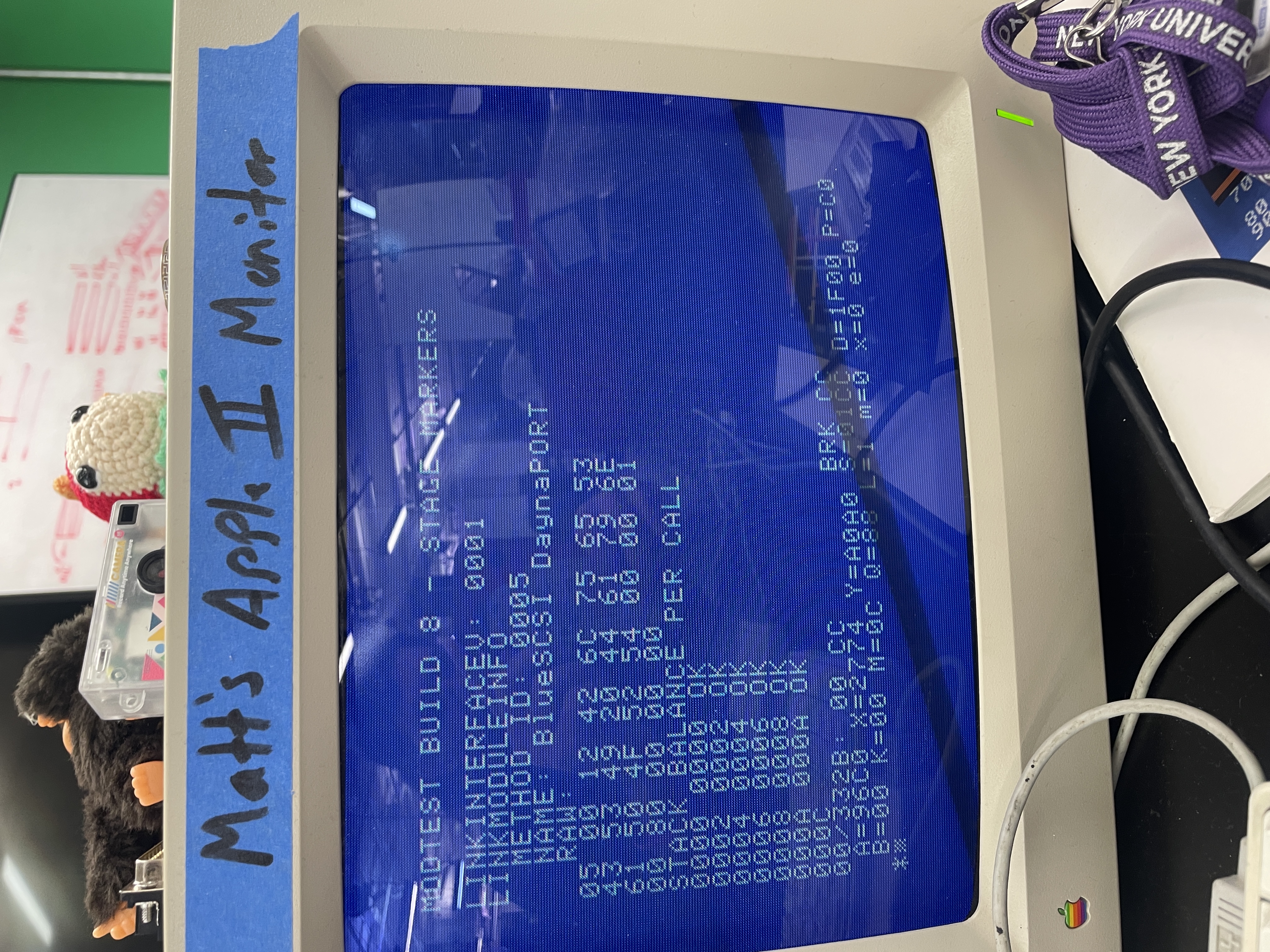
Luckily there is an existing web browser application for the Apple II called Webber. The browser can only load a very small subset of sites because it can only display HTML and invoking and JavaScript causes an error. Seeing the computer get assigned an IP address and having it communicate between with my Mac made me incredible happy. Not to mention seeing an actual webpage load.
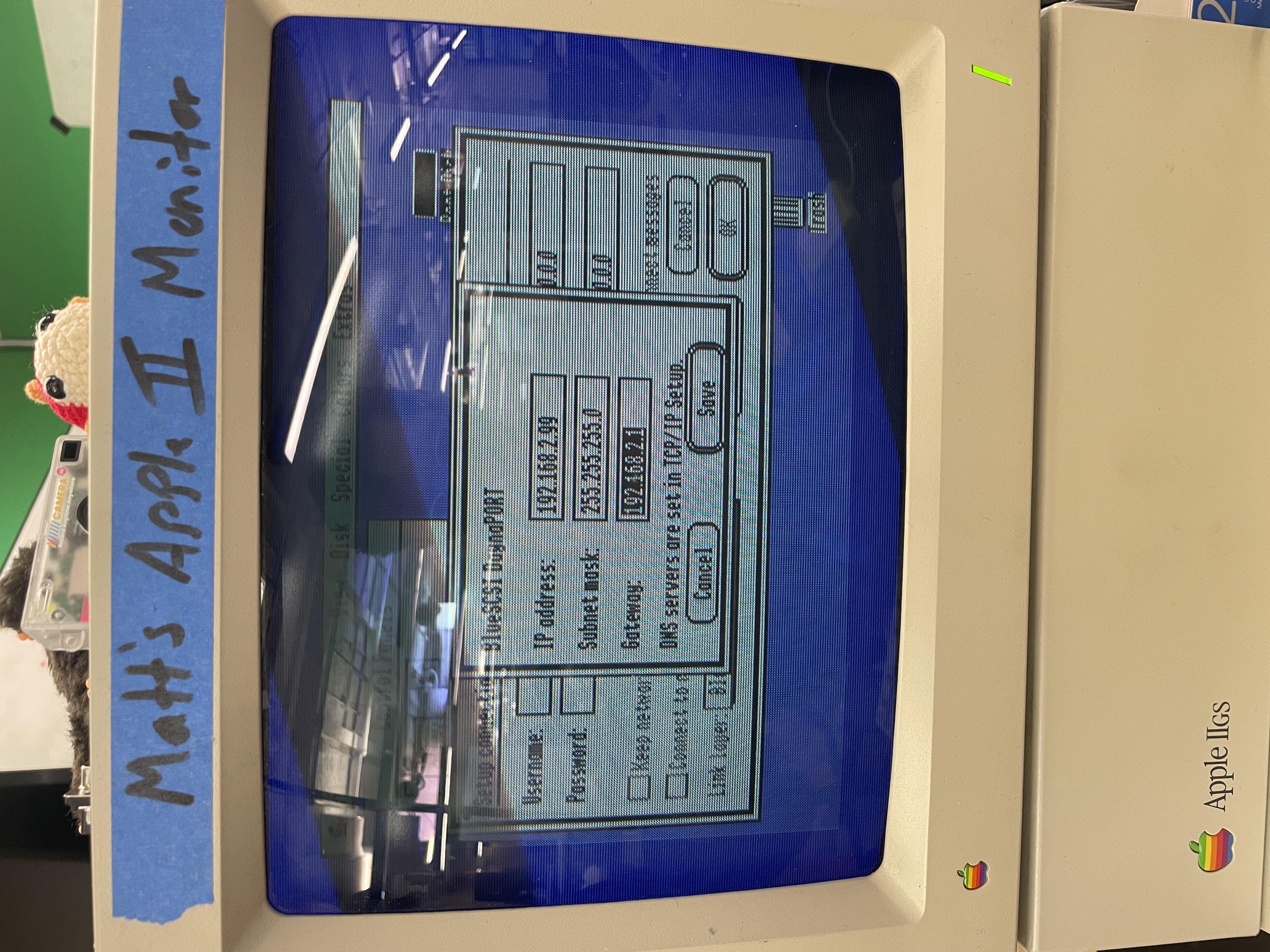
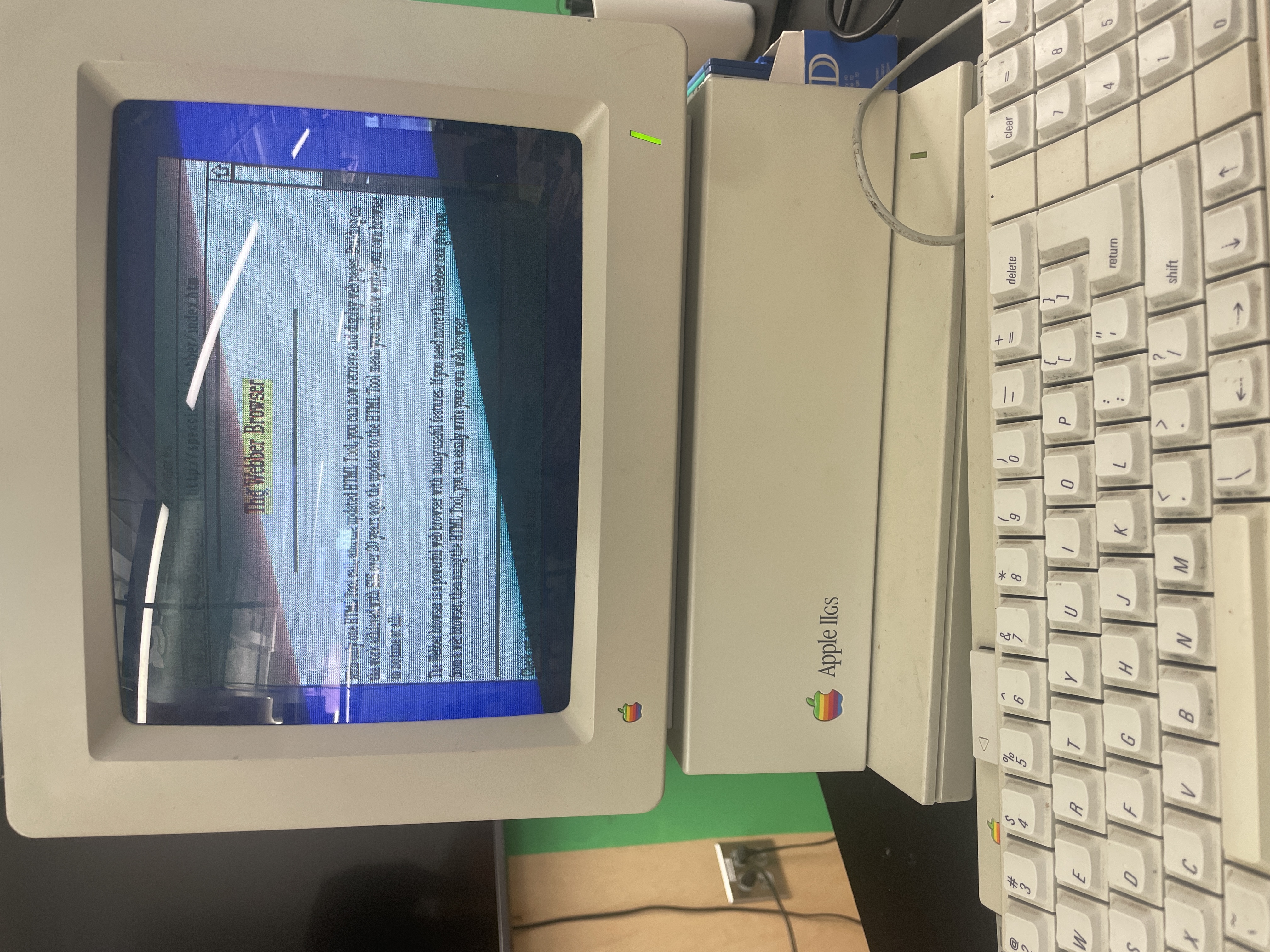
Following advice from Niko. I’m going to step back from this project for now. I need to sit with this accomplishment and focus less on the technical capabilities of the machine, and instead explore the artistic aspects of what resurrecting this computer can mean. My first steps are going to release this driver I developed, meet people in the vintage computing community, and explore what this exploration means for a vintage computer to be used in a similar way to modern computers.
Reading Notes
Over the past week I’ve continued reading as much as I can:
- Medium is the Massage by Marshall McLuhan
- From Cybernation to Interaction: A Contribution to an Archeology of Interactivity by Erkki Huhtamo
- There is No Software by Friedrich Kittler
Each in there own way explore the methods that make code/software it’s own type of media. McLuhan’s tongue-in-cheeck version of his “Media is the message” was a beautiful book in it’s writing and communication design that was also ahead of it’s time. Even though the book was written around the 1970s, it’s message felt fitting for today as well. With the introduction of electronic circuits and electronic media there was a large shift in how information was understood. Media, and especially electronic media, creates a new environment that we exist in representing a fundamental shift in knowledge transfer and communication among people.
Much of what I’m reading involved a new understanding of technology during times of change. New concepts and methodologies seem to stem from moments when culture and technology converge at the right moments. From McLuhan’s time, the introduction of Wiring / Arduino, to AIs & LLMs bring an ontological shift in labor, technology, and creativity. What I’m thinking of now is what is the new ontology in a time when so much is shifting due to generative models.
My new belief is that LLMs are ushering in a new representation of generative media. We, as a technological society, have been practicing storing increasing amounts of data about our world. Now we’ve entered into a new space where alongside storing data about practically everything, we are generating data to simulate new environments alongside generative images, videos, text, etc. etc.