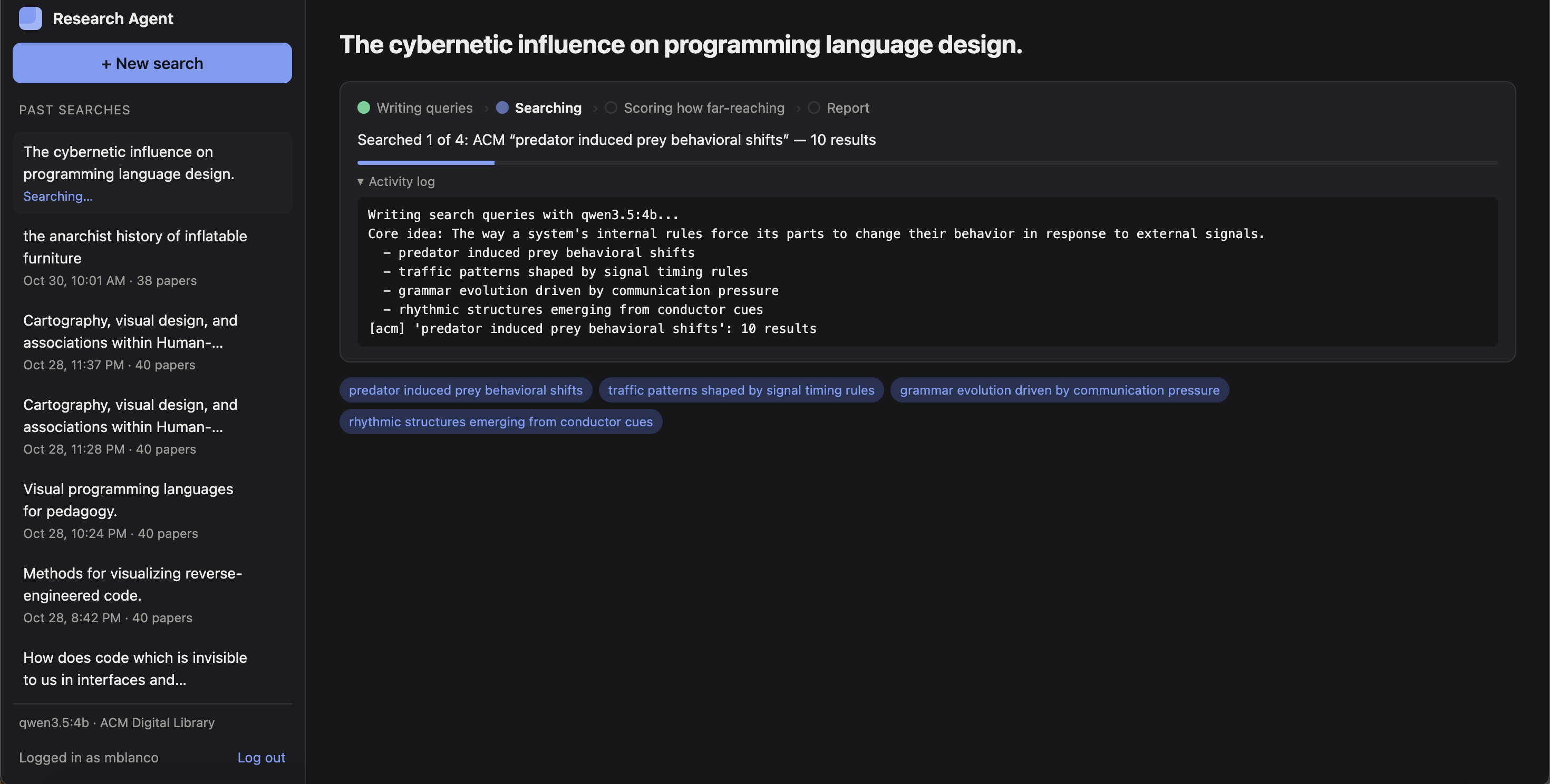
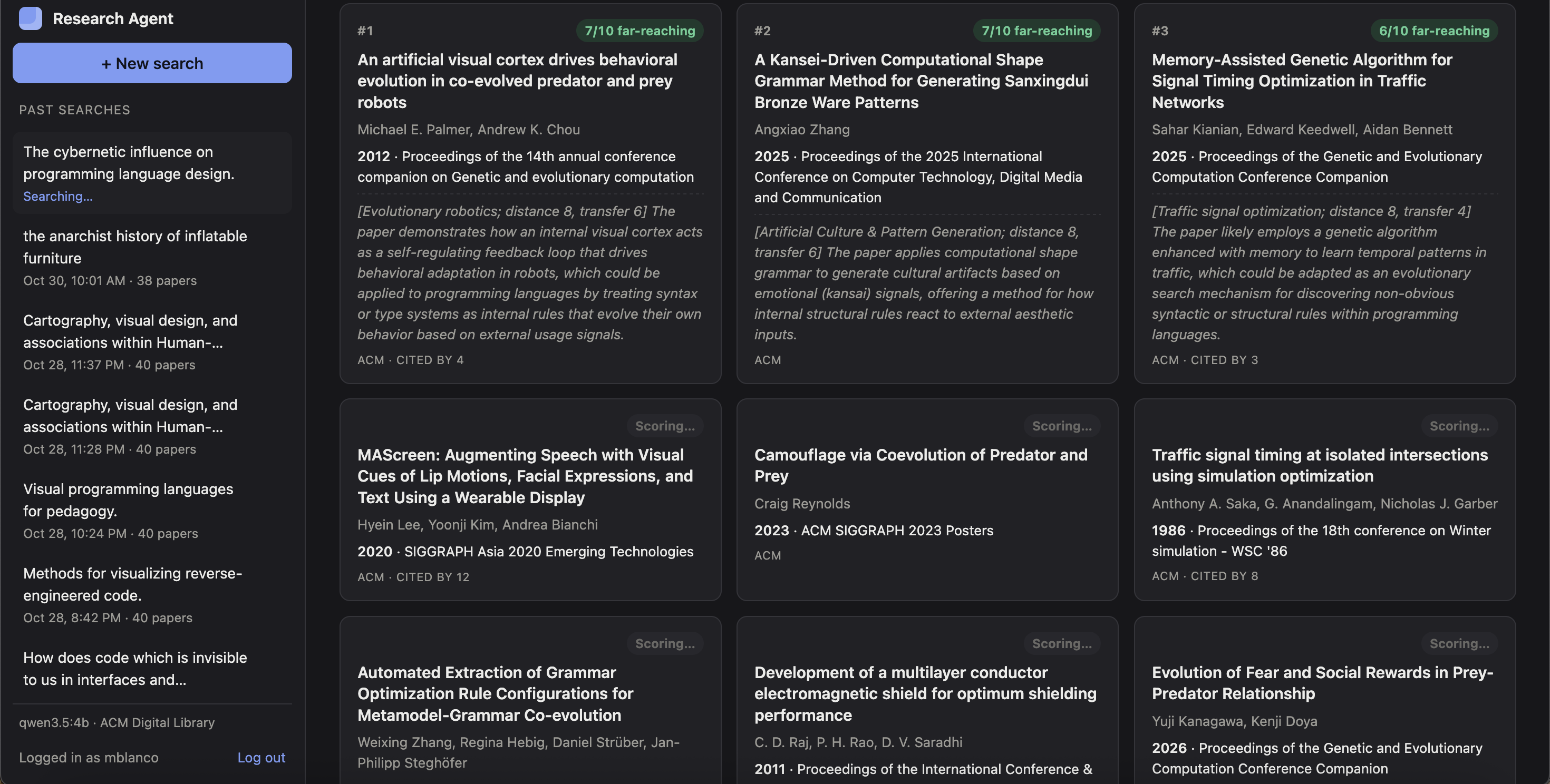
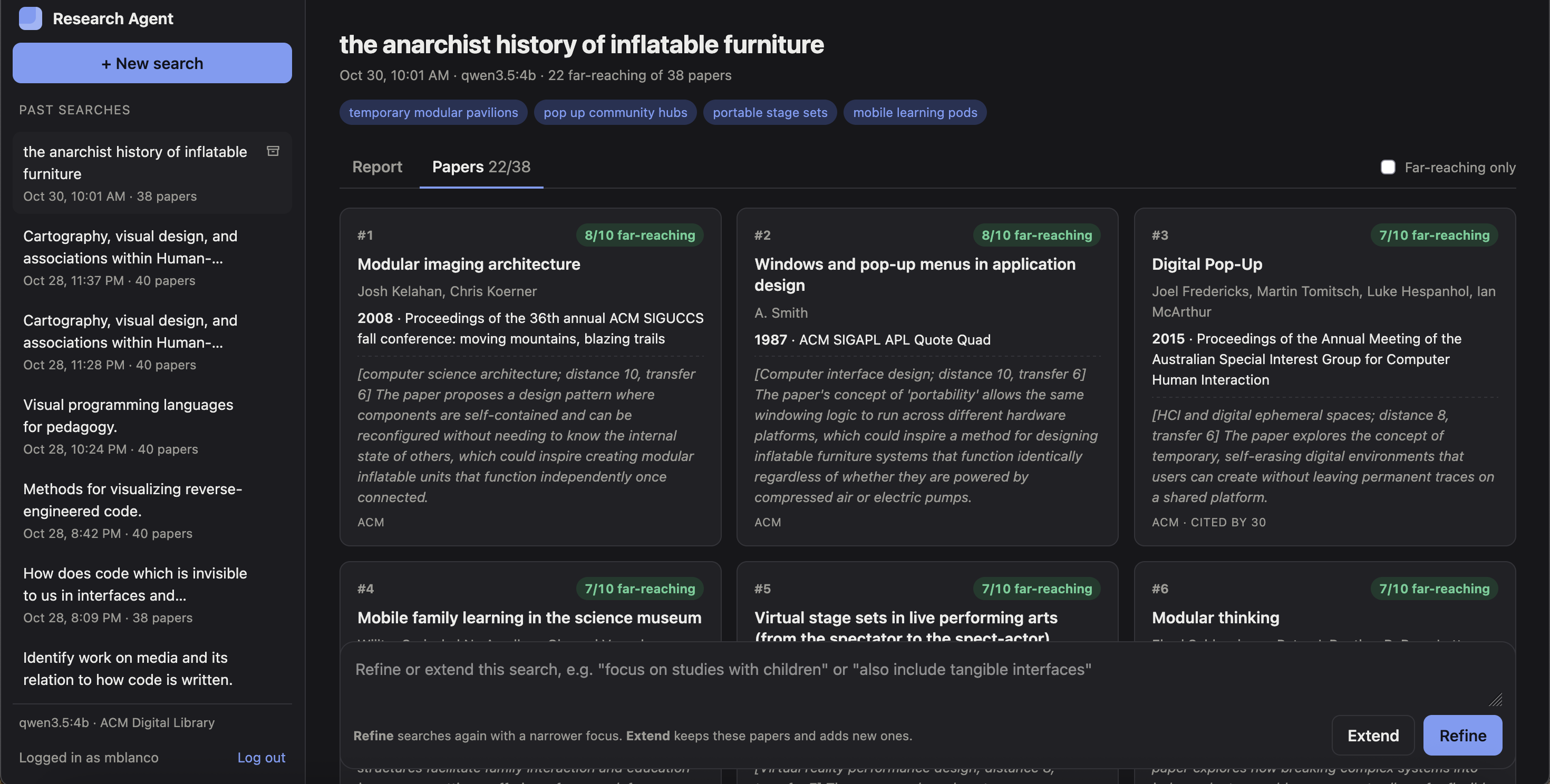
For my first assignment, I wanted to root a tool in rooted in something that I would actually use (even if it’s purposefully designed to have more friction). I decided to make something that assists in conducting academic research. There are so many conferences and papers published even before AI technology became prominent, it’d be a full-time job to simply stay on top of new innovations. At the same time, I still want to spend time reading new and interesting papers. Other research tools, such as Perplexity, summarize findings which can deteriorate my research skills. A second aspect of the tools is to experiment with local models and older hardware. In my aparment I have a PC with a GTX 960, a 2021 AMD Ryzen CPU, 16GB of RAM. It’s old. The core process of research is reading in it of itself, so I did not want to make a piece of software that would summarize and findings. Instead, the Research Agent assists in finding papers on a given topic. The project presents friction in two points. First, invisible to the user is the project is running on a computer with inefficient hardware, and Qwen3.5:4B local model. With fewer parameters and more constrained hardware the tool runs slowly, and it’s search responses are different than what a data-center-managed system could output. The tool was constructed mostly through Python with the code generated using Claude Opus 5.5. I provided two initial academic sources to search from, and plan to add more that relate to my research interests. A web search for academic writing felt too broad for what I was looking for which is why I chose to constrain the system to pre-determined sources such as the ACM digital library and Design Research Society conference proceedings.
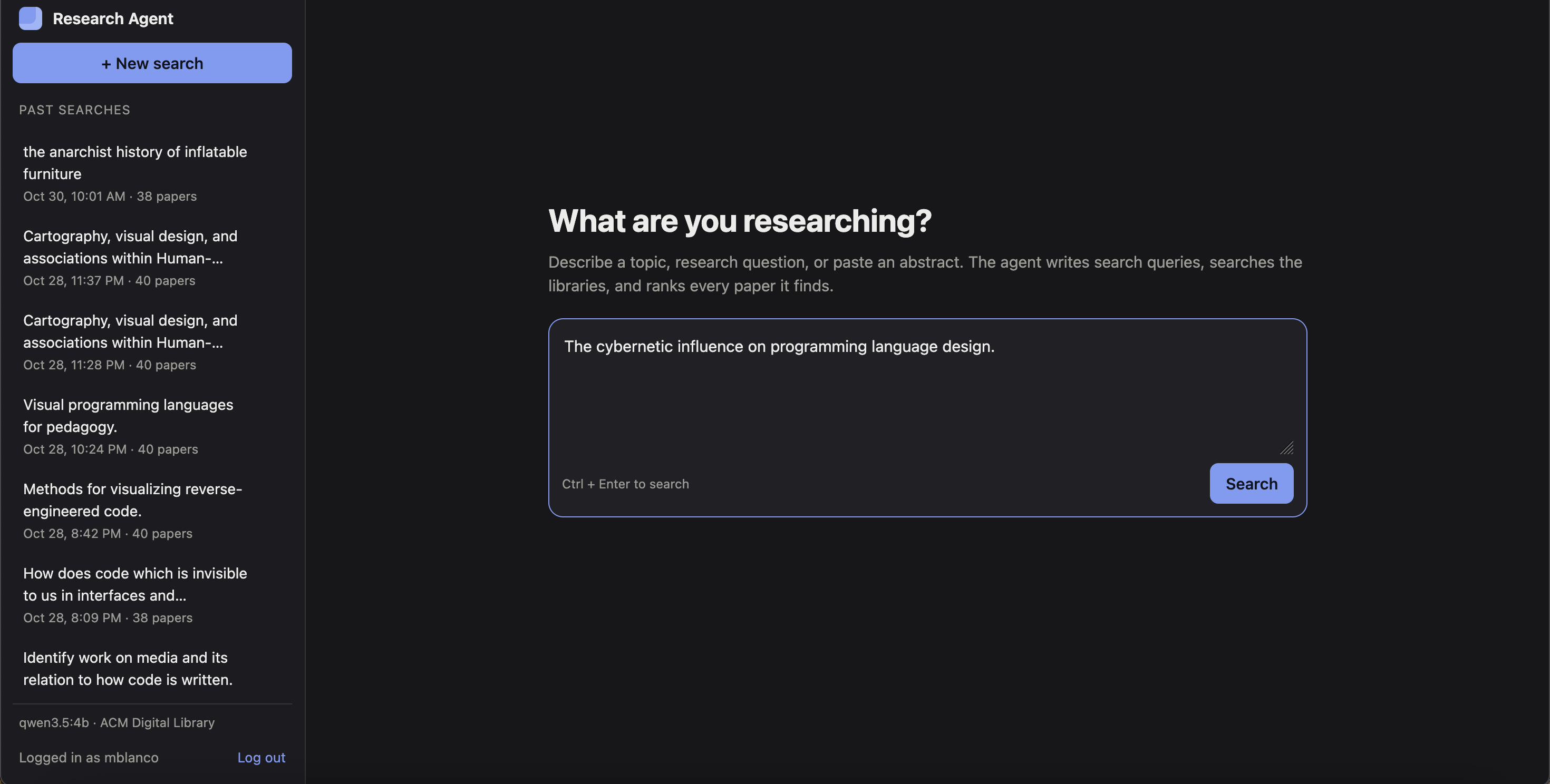
Using Ollama and it’s Python API, I used Claude Code to create a chat research interface. When opening the page for the first time, a user is presented with a text input for a research topic.
In the spirit of friction, I also did a brief write up of what it would take for someone to “make” their own AI system. Inspired by Anatomy of an AI and Thomas Thwaites’ Toaster.
Recipe for an AI:
- Dig a hole in the ground
- Extract precious Rare Earth Materials 2a. [Optionally] exploit local communities for more efficient resource extraction
- Smelt and Refine metals from Step 2
- Manufacture a thin wafer of silicon
- Precisely hit the silicon with thousands of lasers on microscopic points
- Assemble silicon chips onto printed circuit boards with additional electrical components …..
- Boil water
- Use resulting steam to create electricity
- Power the circuit assembled in Steps 1-6
- Develop an assembly language to program high and low electrical signals within the silicon chip
- Repeat Steps 1-6 until an ungodly amount of computing power has been