Week 2 - Mechanisms, Mechanisms, & Mechanisms
After last class we were introduced to all kinds of mechanism. The class helped give the names for mechanisms and hardware I’ve seen before, but wasn’t certain how they were implemented.
For creating my own mechanism, I knew from the start I didn’t want to deal with trying to cut gears without using the laser cutter or 3D printer. Though I did want to explore cams and how movement can be transferred from a crank to move an object in space.
From past examples it made sense how an object could move vertically or horizontally, so I wanted to make something simple that moved in three axes. Because mechanims are complex, I sketched my initial idea:
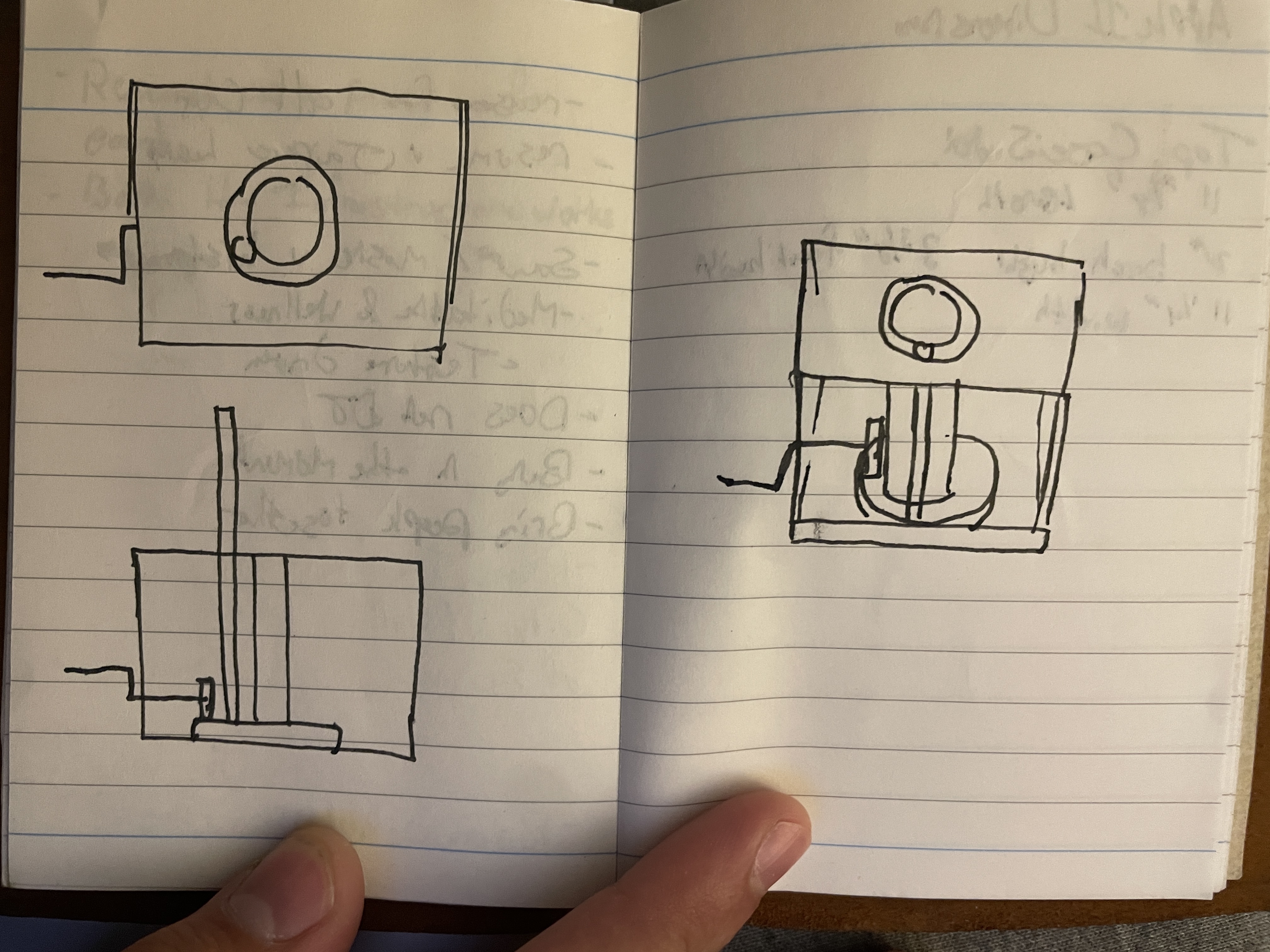
A crank would convert motion perpendicularly to a cam which would rotate an adhered dowel in a circle. Earlier in the week James had used hot glue around a cam which was able to create enough friction to rotate another cam.
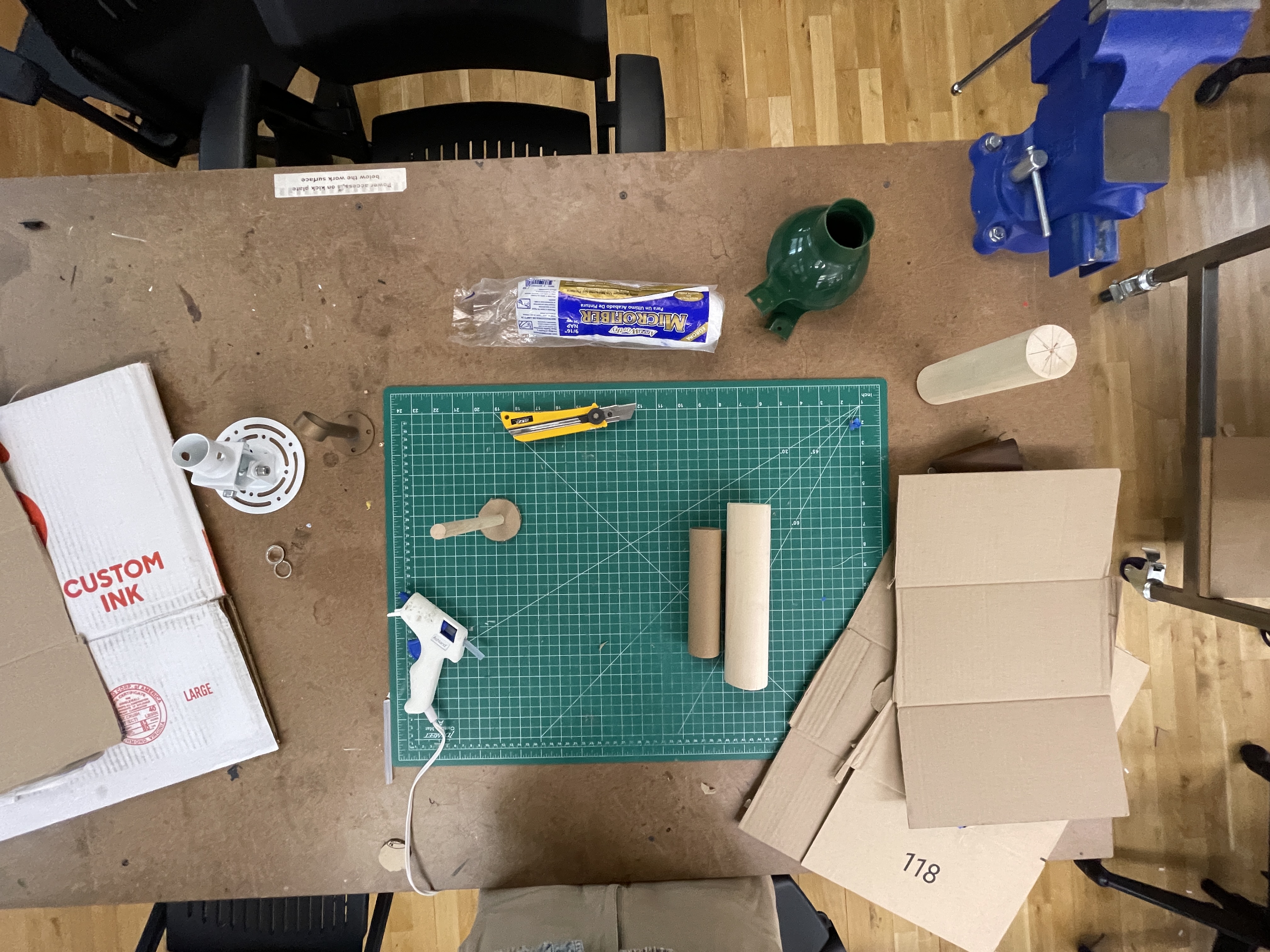
First I found scrap material around the shop and junk shelf. Partially knolling the final materials and tools:
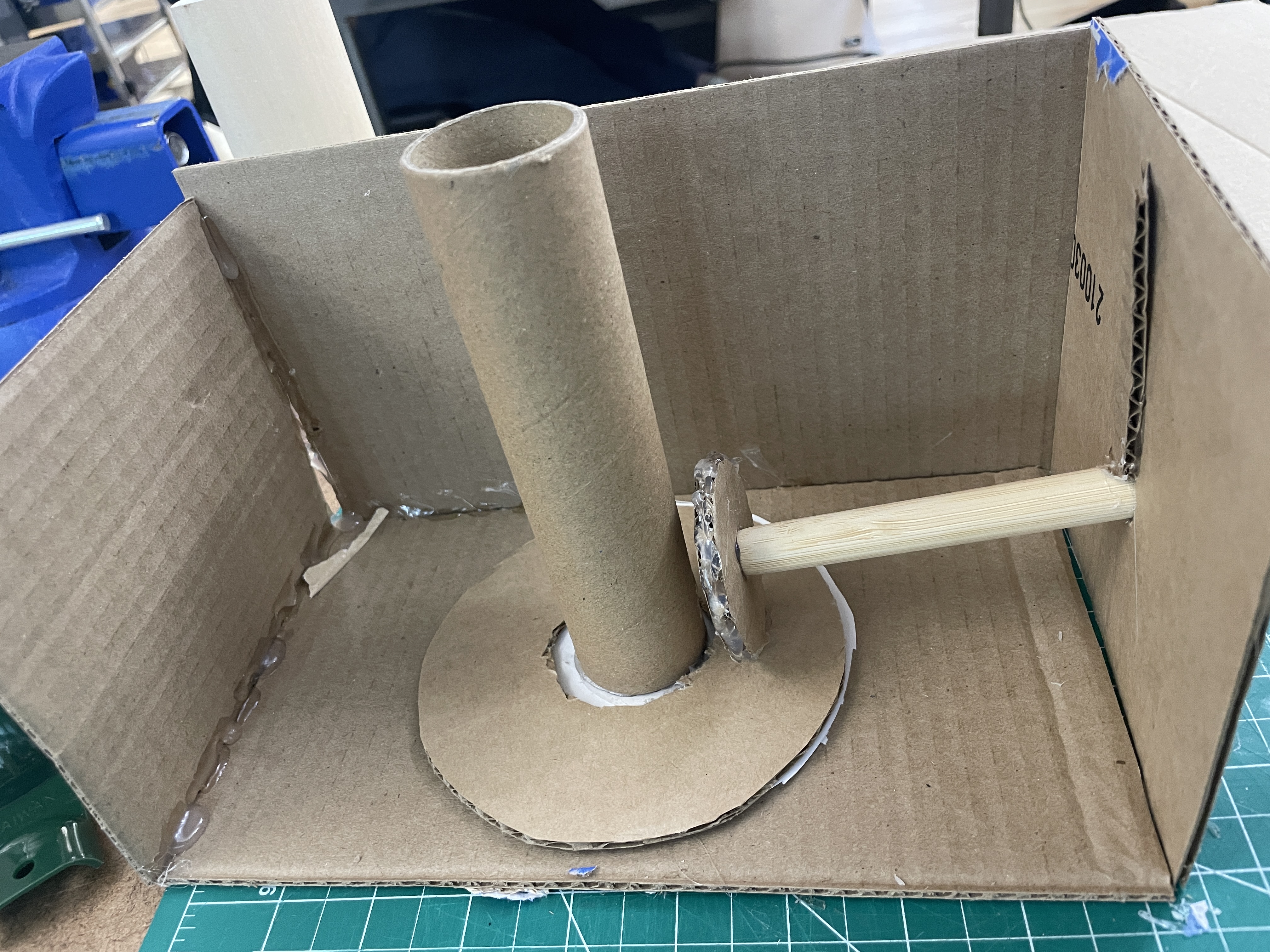
Next, I assembled a simple box. The dimensions were rough, but it worked to assemble my mechanism. In order to have the simple rotating cam the box needed a central pillar to secure the cam. I also used a piece of card stock to reduce friction betweem the cam and thr box.
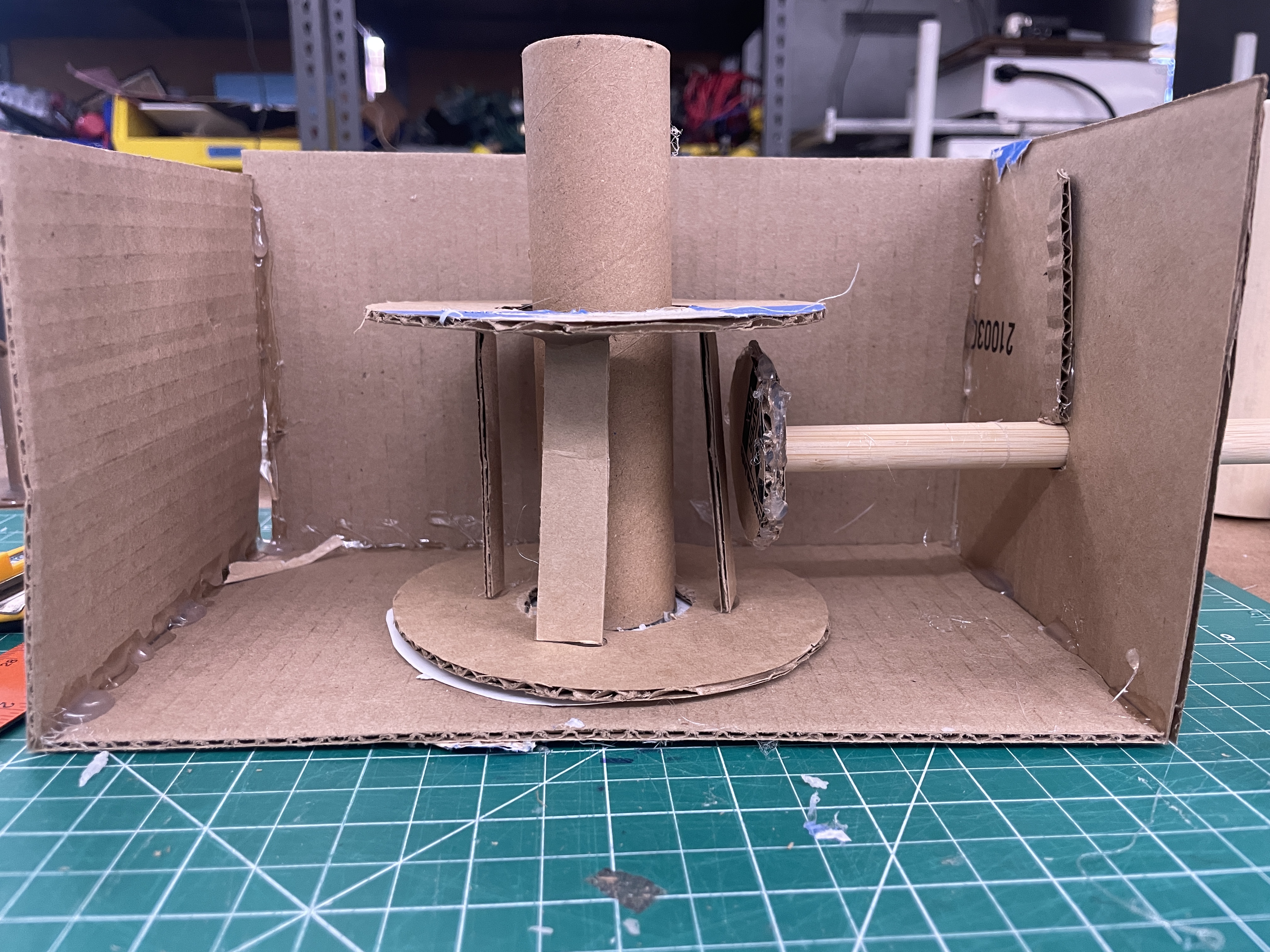
I created a second layer on the cam so it would so there would be a stable base to attach a dowel to. With an angled force on the crank the cam turns better than I expected, though because of the unevenness the glue sometimes gets caught on the support bars.
On the junk shelf I found some flexible wire and fluff so I thought it’d be fun and simple to have a small moving cloud. My other idea was using a halloween cauldron with a spinning spoon to “stir the pot”
Fabricating the mechanism was fun and simple, and it matched my sketch fairly well. The only thing I missed was the second layer of the cam. More precision tools would have made it work smoother, so for the rest of the classes I think I’ll be working towards the fabrication of the mechanisms themselves than what they control.