Week 2 - Playing God (By Storing Energy)
The first project: stranded on a desert island, paired with our physical computing and fabrication equipment we have to make something to improve our quality of life.
Fate was kind to me and a friend found a record player on a sidewalk and thought I'd like to use it for something. After opening it up and testing it out, the whole record player works and it only needs a 12VDC power supple (which I happen to have already).
Aram and I had already experimented with a way to convert AC power generated from a stepper motor to DC power, and there happen to be pre-fabricated bridge rectifiers in the shop to use. While I'm frustrated the components already exist and I didn't need to spend as much time experimenting with making my own, I'm glad I did because I think I understand the system much better now.
The Project
Liyah and I decided to work on the project together since, and so we got to work to simplify and store the energy generated from the hand-crank stepper. We decided to try and fabricate a power adapter for the record player. Essentially a box that has a DC male jack that can be used instead of a traditional power supply for the record player. And to give us a challenge, our goal is will be to power the record player for a few seconds after a person has stopped turning the crank using capacitors. With a stretch goal to add LED indicators as the capacitors charge and discharge.
After testing, we learned that the power that was being generated by the crank was not enough to both power an LED and store charge in a capacitor that could be discharged later. I knew we sould have to venture into the territory of mechanical energy and energy transfer. I may not be a formally trained engineer, but both of my siblings are so I think I picked a thing or two up from them. Liyah and I figured we needed to add a system of gears to convert a larger gear with more torque into more speed for the stepper motor shaft to generate more energy.
I found some gear patterns online to test and spent a day fabricating a rough prototype. Originally I attempted making a cardboard box to quickly see how the system would work before I realized gears needed to be mounted to rigid surfaces for the best results. I raided the shop for scrap plywood and acrylic and maanged to put a simple finger-slot enclosure together with precise holes for the motor shaft and gear mount. All in all the enclosure felt fairly secure and the gears turned smoothly on the acrylic.
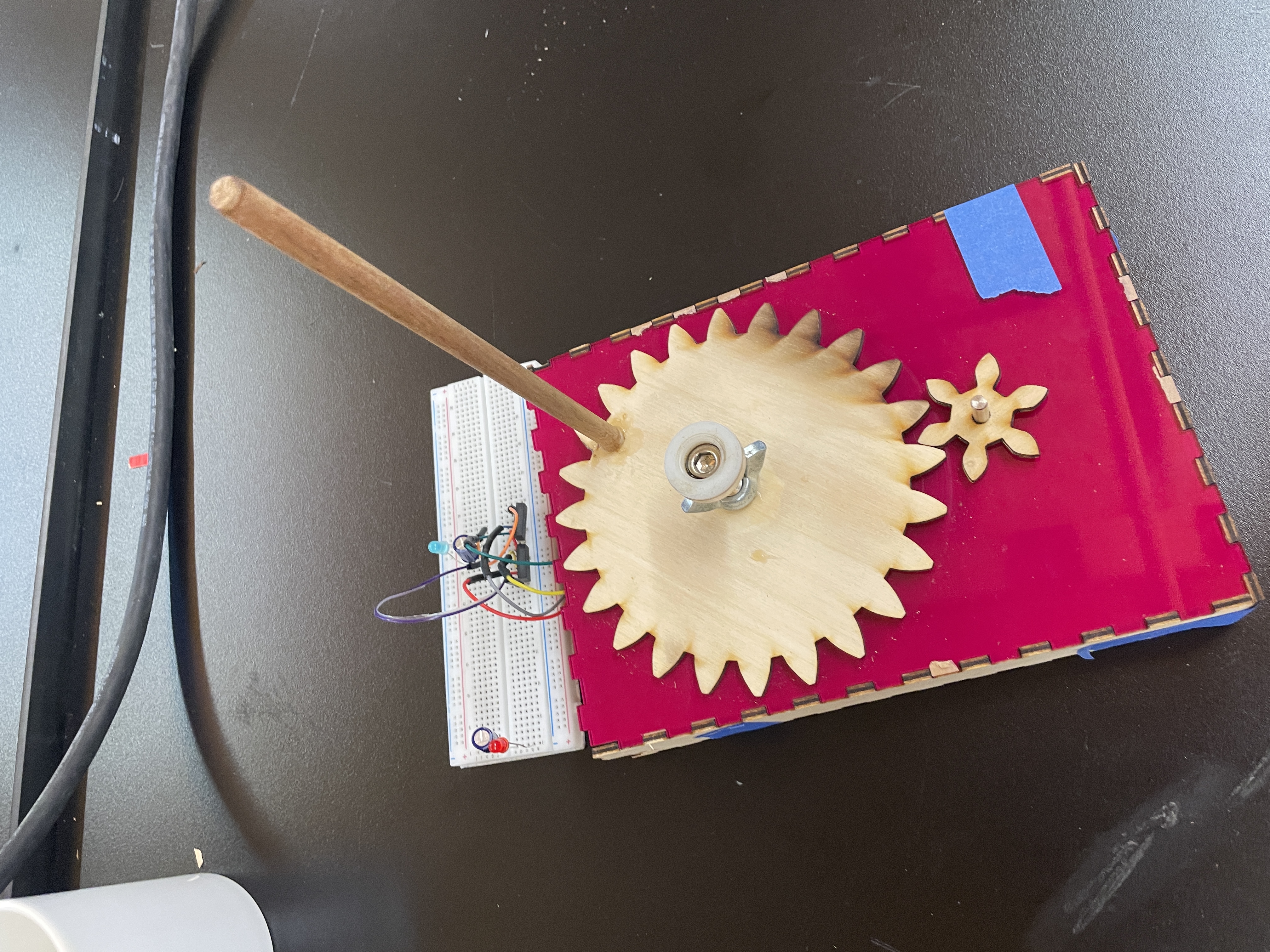 Figure 1.
Liyah and I also spent a lot of time learning about RC time constant. Specifically the relationship between capacitors and resistance to slow the charge and discharge of a capacitor. We tried a few different schematics but were having trouble seeing any results. Though with Arjun's help he noticed our circuit was in parallel, so the LED was only being powered by a test Arduino rather than a capacitor.
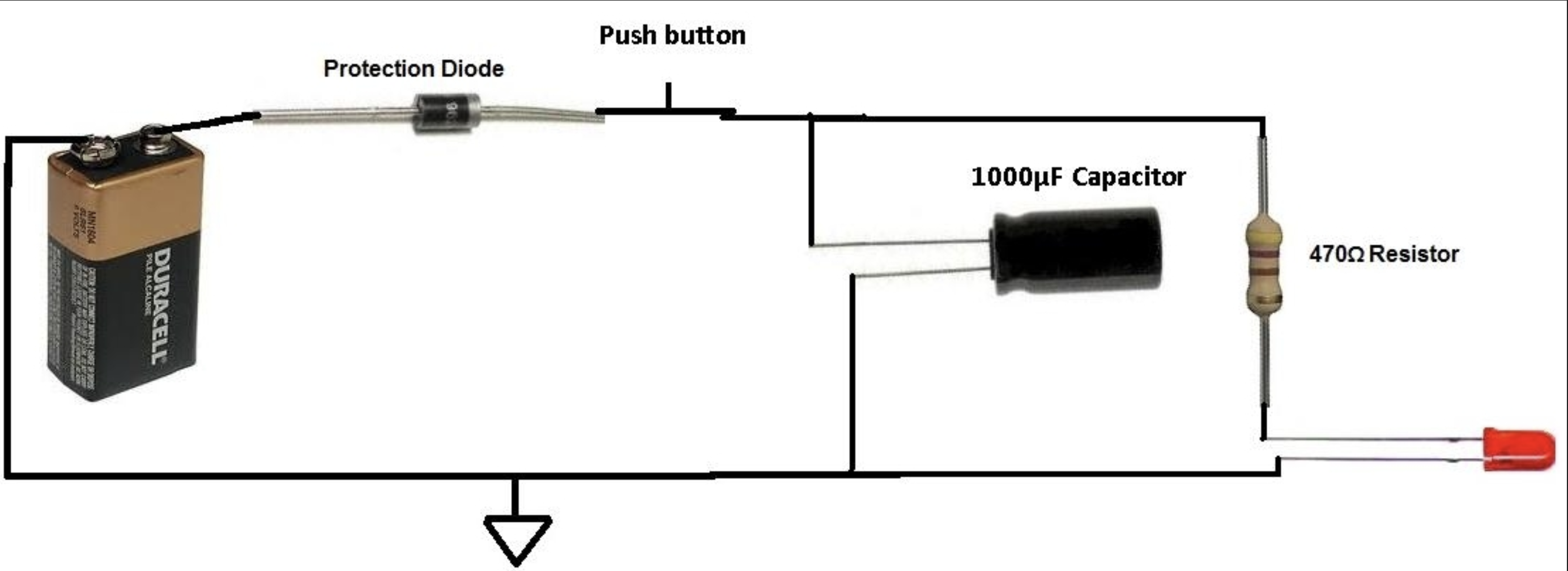 Figure 2.
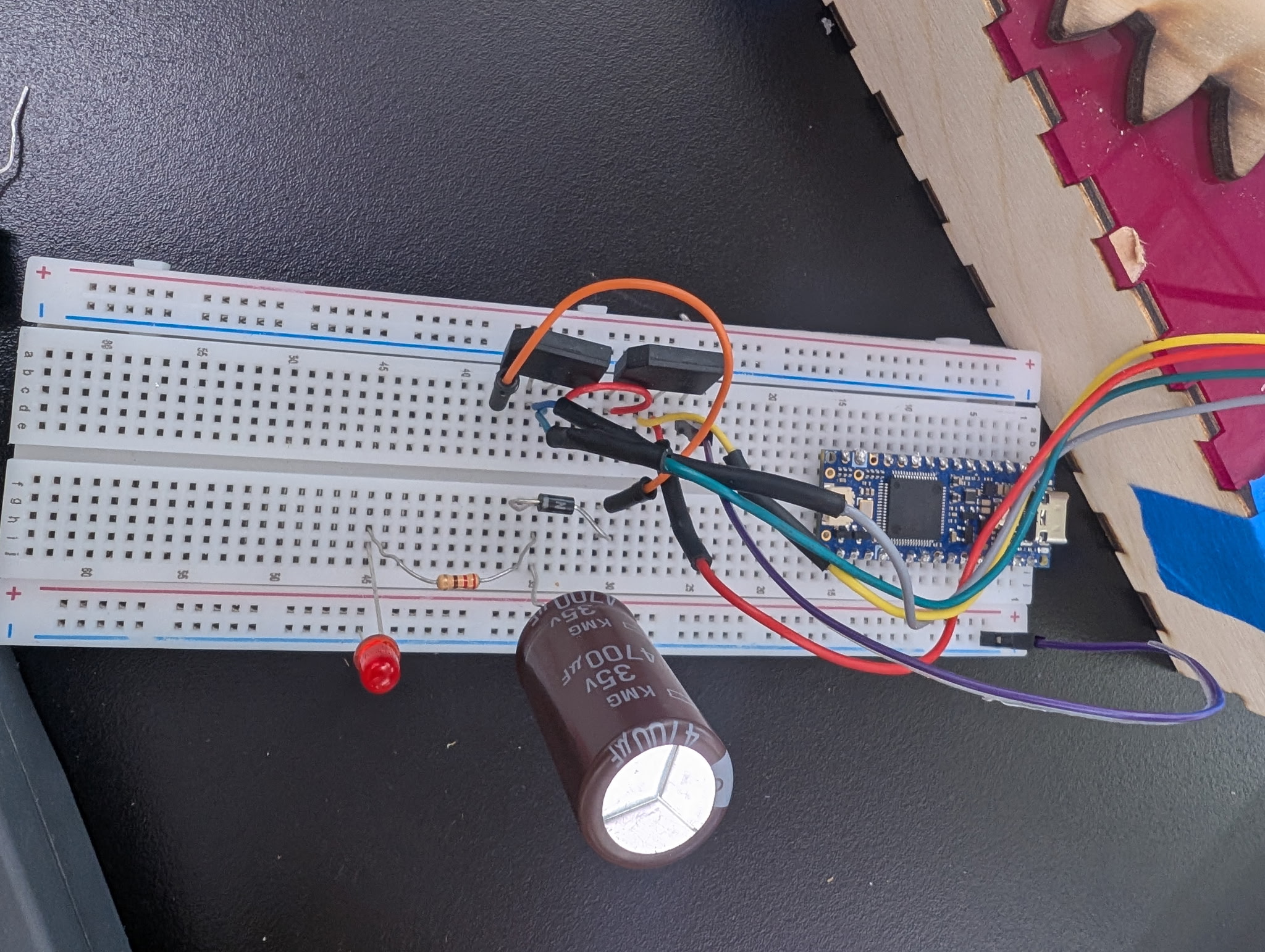 Figure 3.
After some trial and error we maanged to successfuly delay the charge and discharge of a capacitor to power a single LED! A really simple goal but I think it will make creating the power generator box much easier. Now that we have the basics of our system, both improving it and adding the LED indicators, and enough capacitors to sustain power to the record player (hopefully) won't be too bad.