Week 1 - What are intangible interactions?
During the first class of Intangible Interactions, we were presented with three slide for how the word intangible could be interpreted. Going into the class, I was aware of the physical (or lack thereof) that intangible interactions have: that they're usually guided by some sort of sensor. Though, I like the idea of intangible elements being left to interpretation or room for viewers to think.
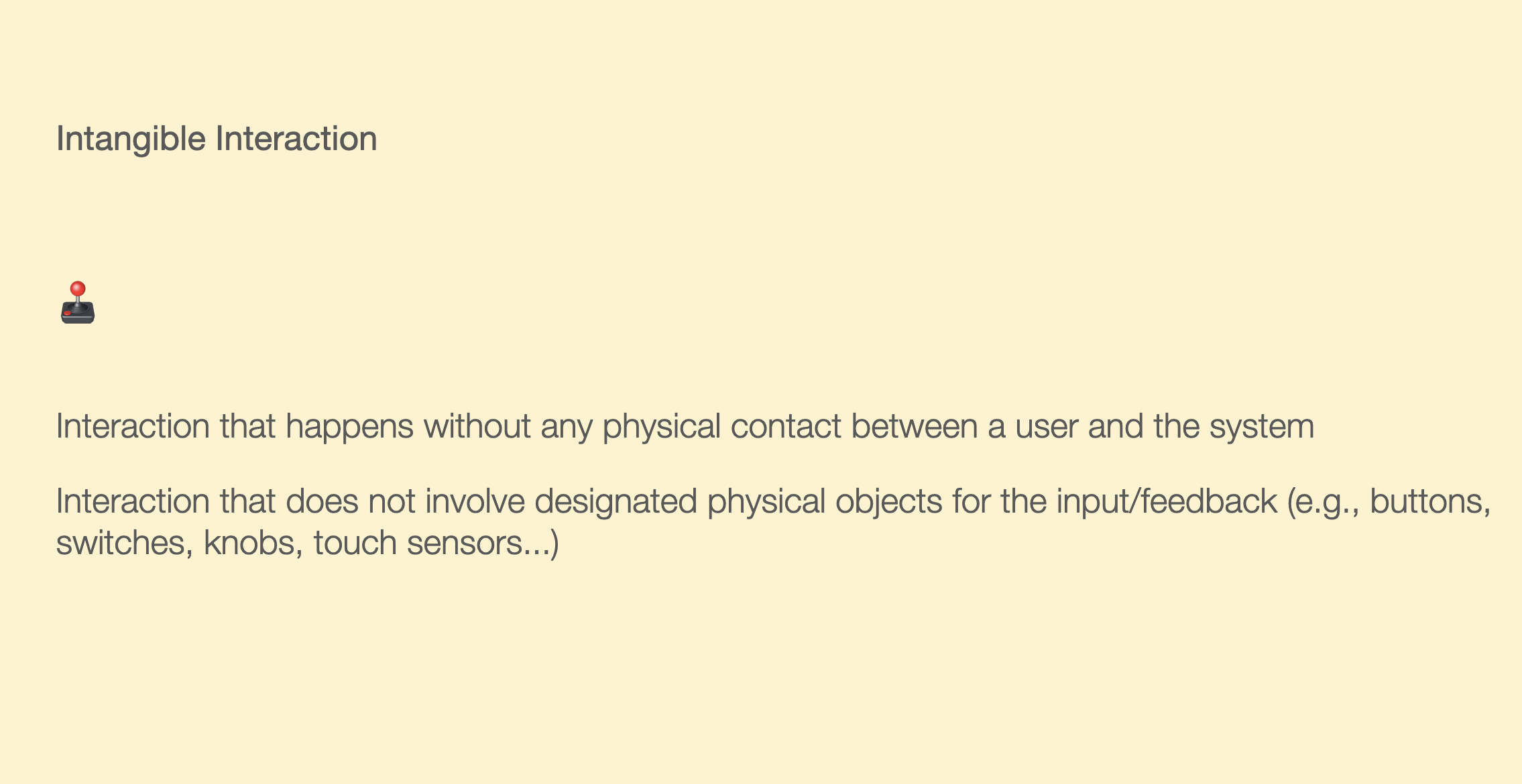
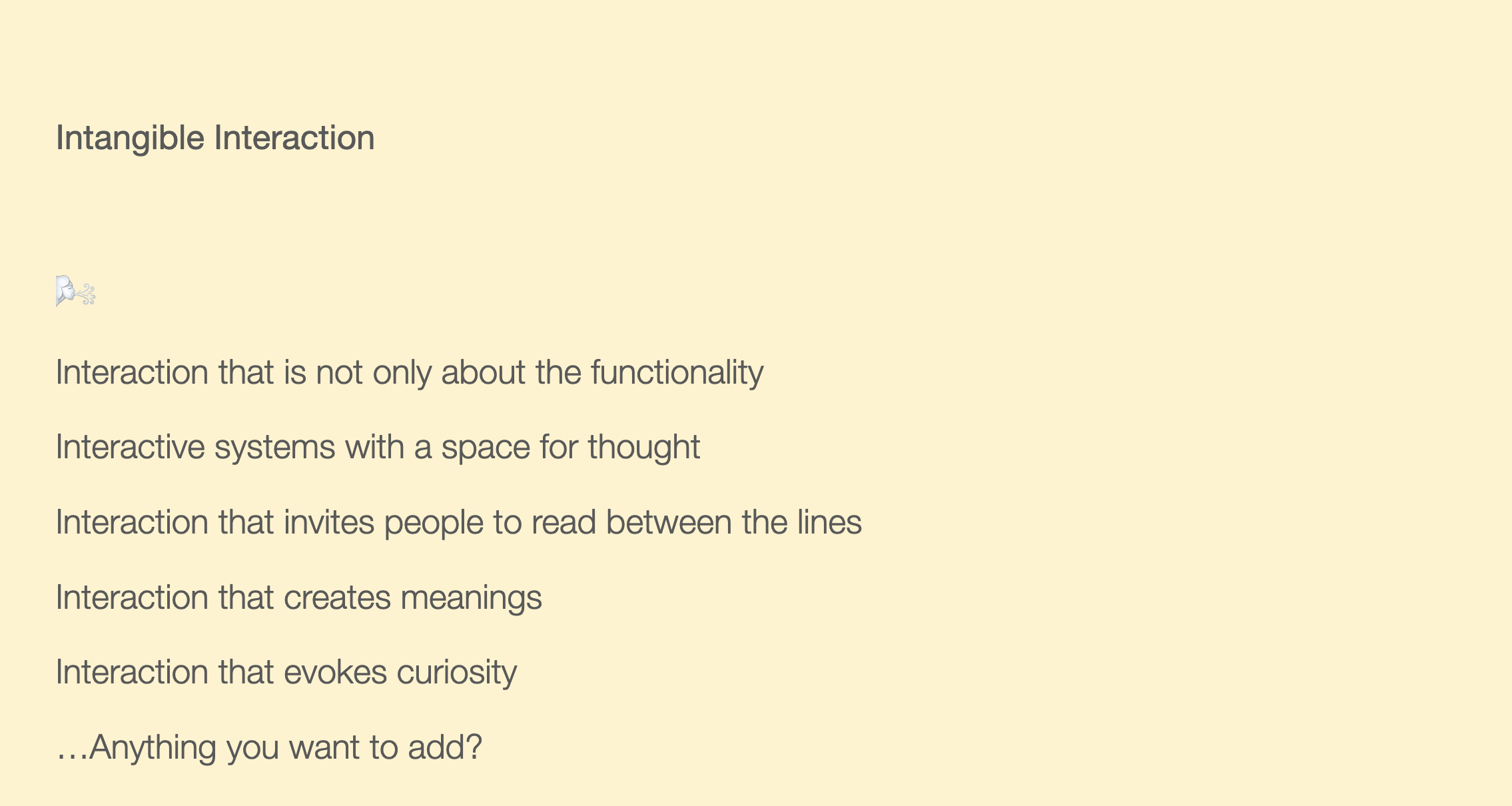
Following the class, I became more excited to explore intangibility and how to incorporate it into my own practice. Working with code, there is already a physical intangibility about it, but I wonder how it can be modifed...
Project #1: Intangible Interaction Among Us
With Jisoo Kim
Observations
In the experiment we learned that the first floor of the American Museum of Natural History does not
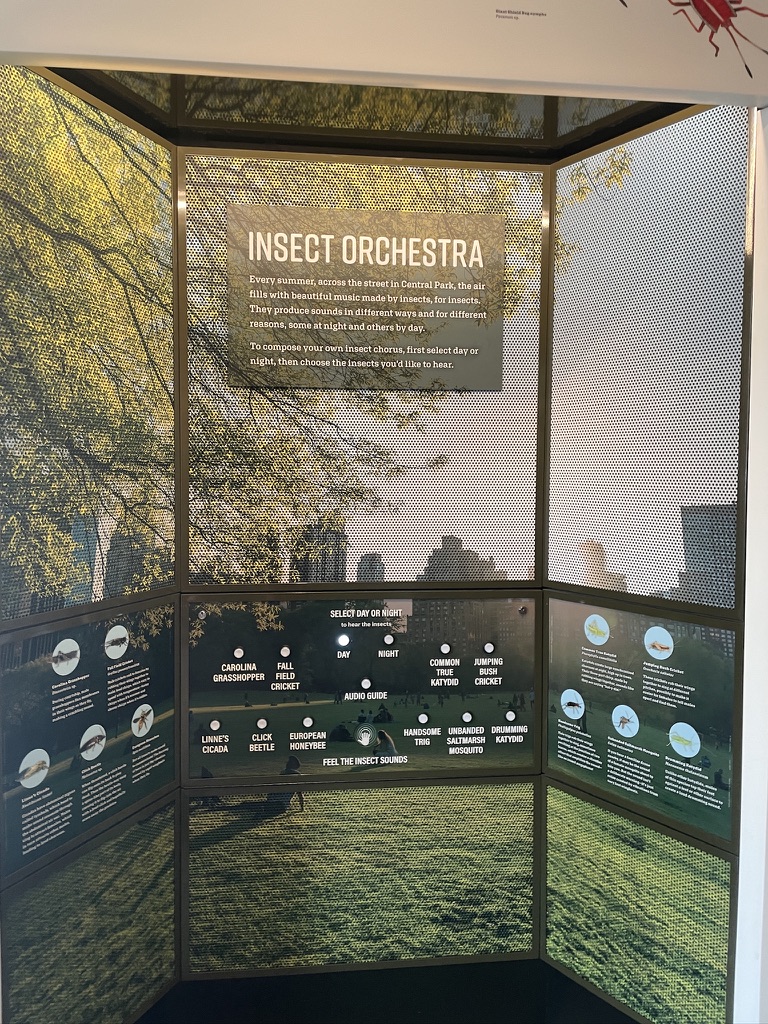
have that many intangible exhibition experiences. The Insect Orchestra exhibit sits inside the
museum's
Insectarium within the Gilder Center. A recent add-on to the museum completed in 2023 by Studio Gang
and
exhibition design by Ralph Appelbaum Associates. The whole center was focused on engaging younger
audience members through interactive exhibits and multi-sensory experiences.
The Insect Orchestra is interesting because of how it allows viewers to experience sound. Alongside
hearing the different sounds of insects, you can also experience the vibrations created by those
sounds.
The exhibit itself was made of many tangible elements, but how someone could engage with the
sounds'
vibrations felt very intangible.
Research
The system had four parts overall:
- Day & Night arcade buttons indicating what type of insects sounds could be activated
-
Two panels of different insects with a button over each insect name
- Pressing a button would toggle that insect's sound
- Sounds could be overlapped on one another
- A circular indented section where a viewer could place their hand and 'feel' the vibrations of the insects
- An audio guide button to narrate which buttons were activated
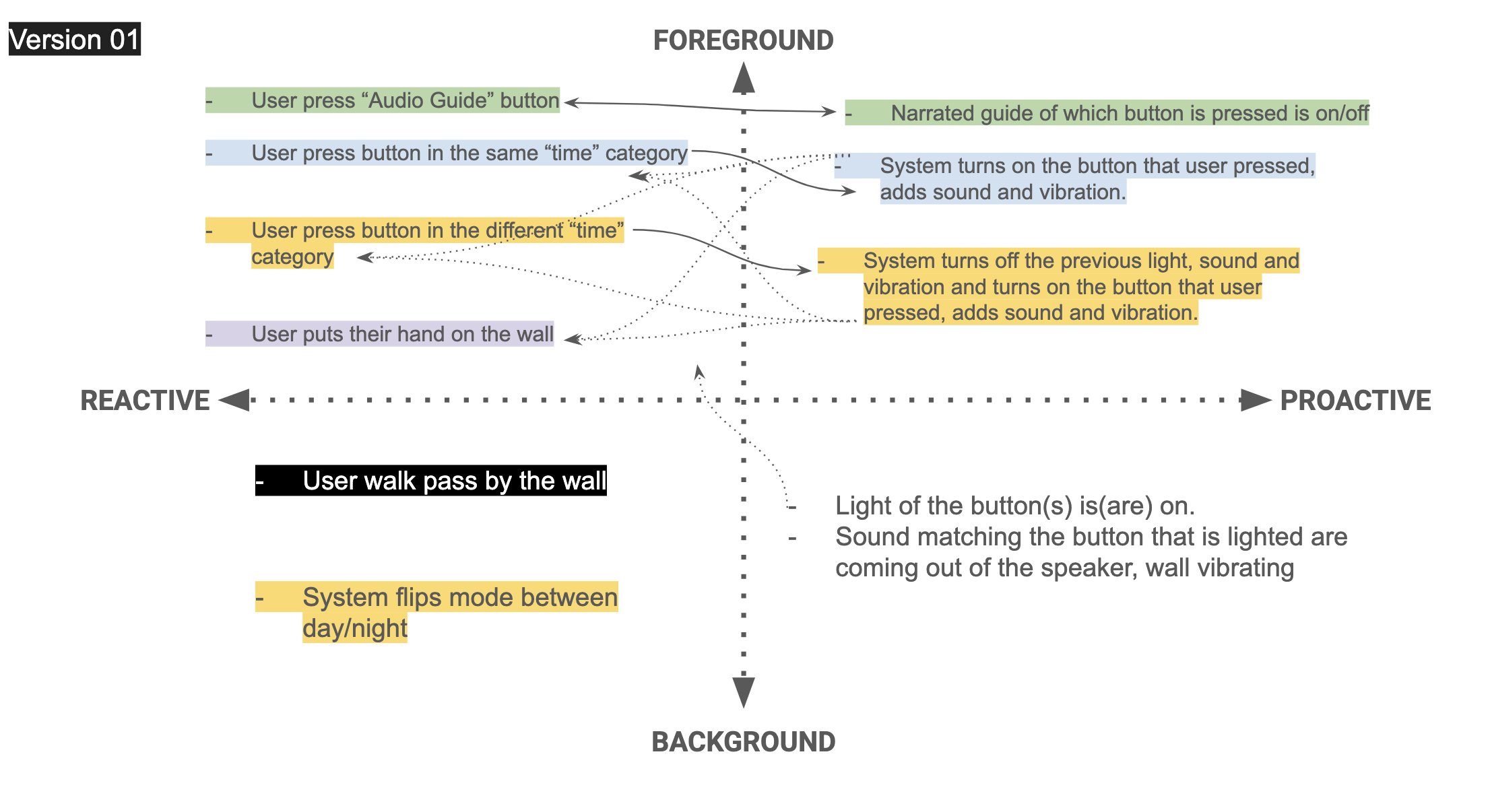
Switching between day and night insects clears the active buttons. An interaction that we were unaware of at first, and attempting to press a day insect while the night was activated would not do anything and vice versa. The whole system could be made with a simple physical computing setup. Each arcade button, and day / night toggle could connect to a microcontroller. When pressed the microcontroller can communicate with a sound board to play whichever sounds have been activated. In the exhibit, it was difficult to tell what caused the vibrations. Either a simple haptic motor or the sound vibrations from the speakers themselves. If the sound vibrations are enhanced with a motor it is probably an LRA motor since they are commonly used for audio applications. An LRA has the following breakdown:
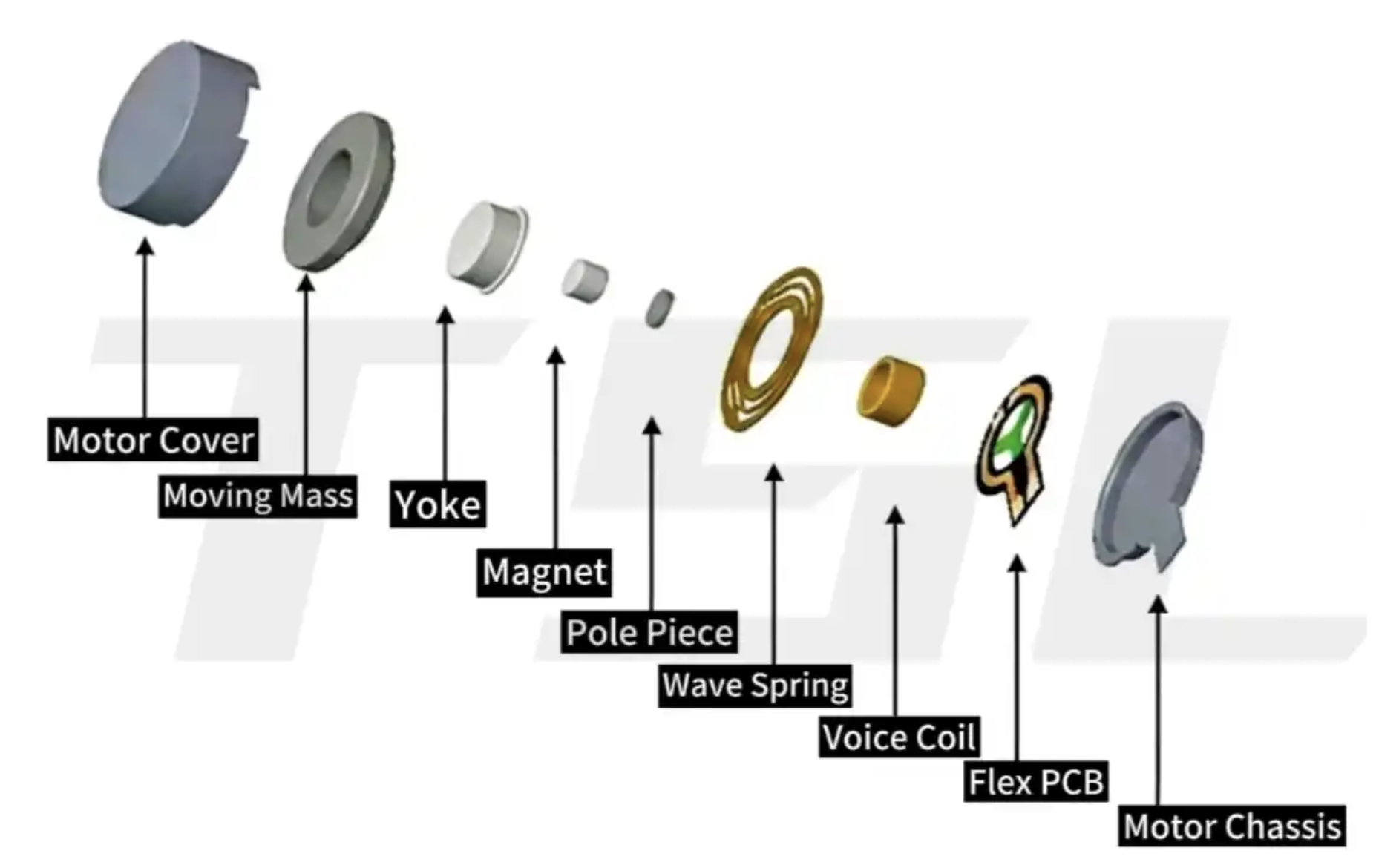
When power is applied to the motor, an electromagnet is activated and amplified, oscillating a moving mass to generate the vibration.
Ideation
The exhibit has a lot of potential to be made more intangible. Besides buttons, different motion, light, or RFID sensors could be placed to activate the sounds of each insect. The exhibit also uses an 'orchestra' metaphor. Orchestras are usually made up of multiple people,so a cooperative element could be added too.
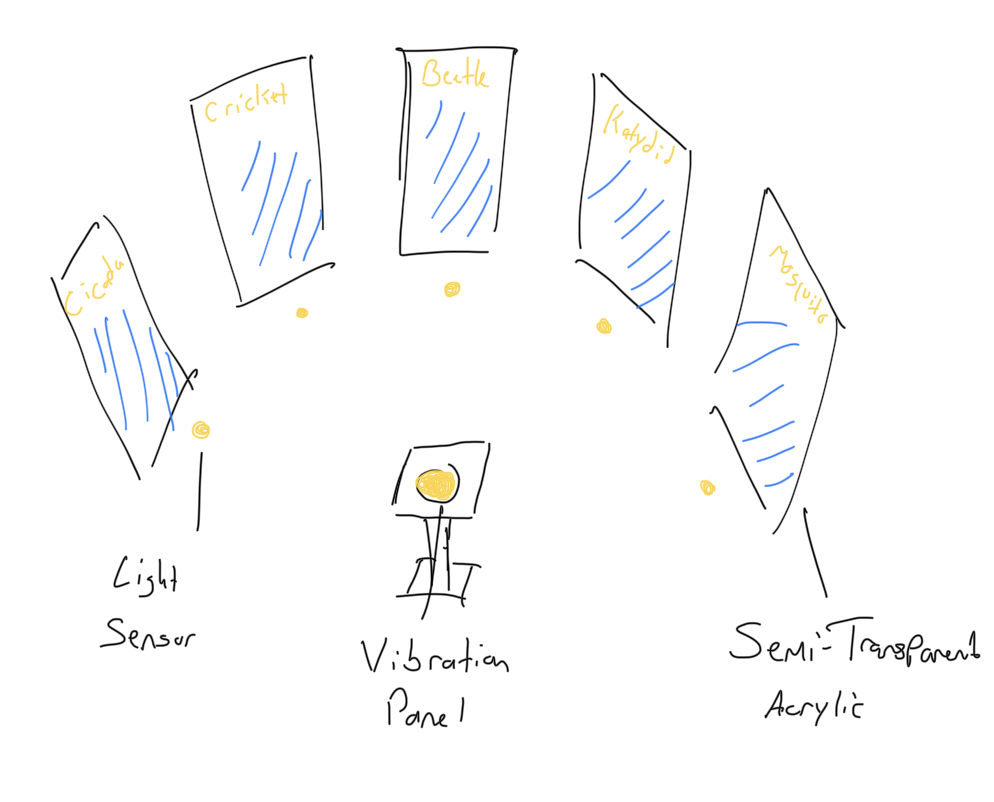
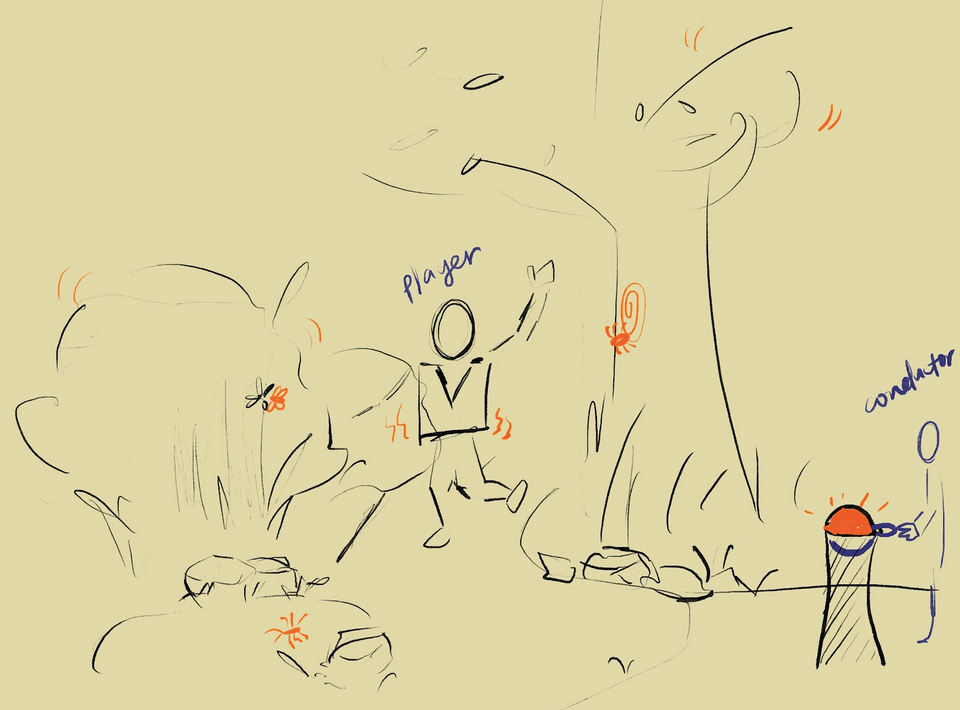
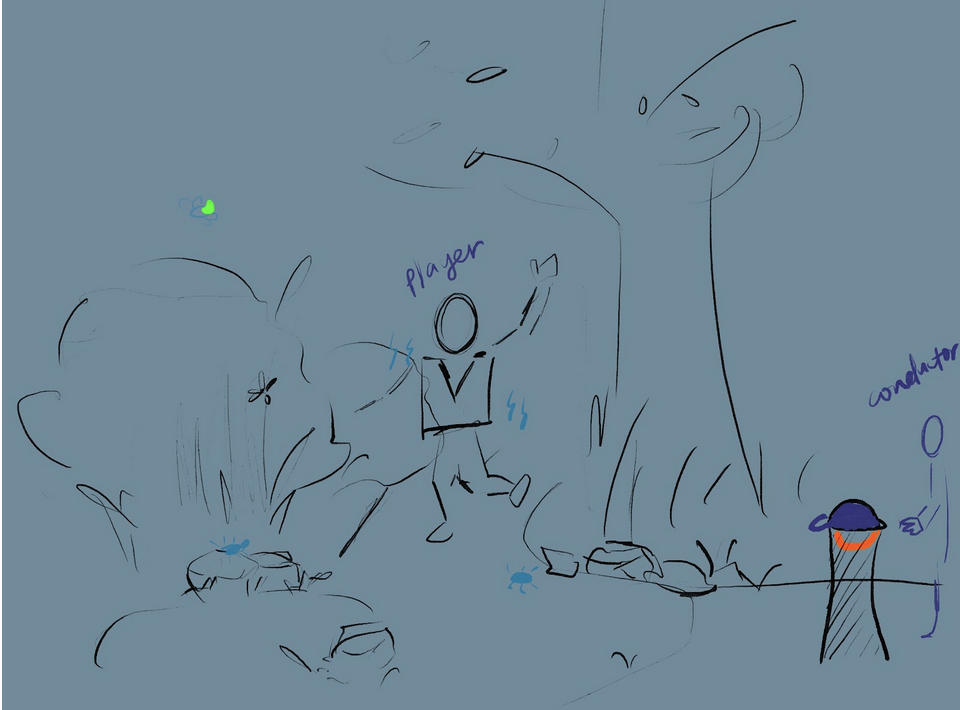
In the sketch, a 'conductor' would be at the center of panels for each insect and could feel the cumulative vibrations of the orchestra. Meanwhile, other people can stand in front of each panel to play the sound of that insect. The sketch encourages kids to interact with one another to change the sounds of the orchestra. The system could also use block or other objects too if few people are around for individuals to play with the exhibit too.
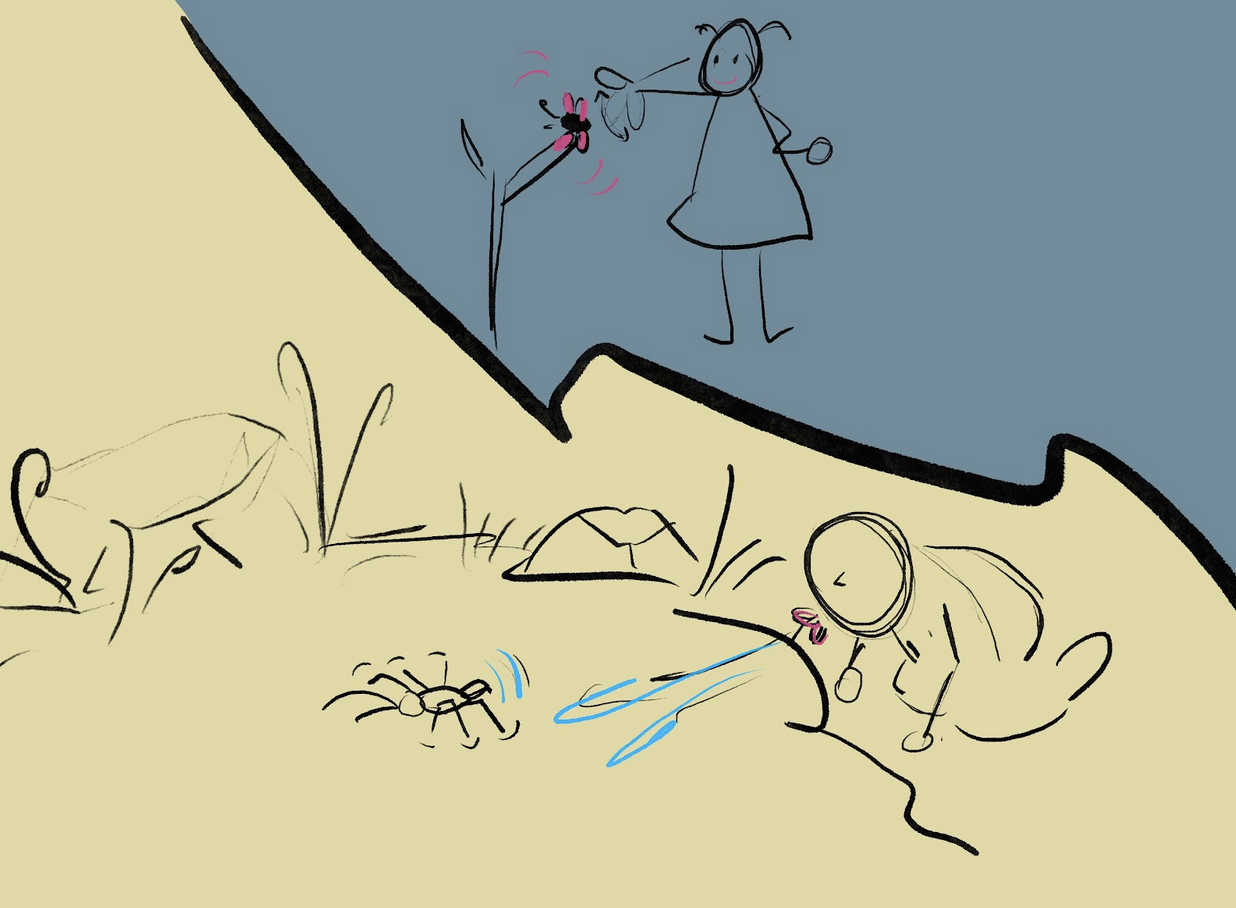
Similarly, another idea could be to have a pedestal with a pad to feel the sounds' vibration along with a camera to identify view hand gestures. Then, a series of panels can have the different insects, and an image of the gesture the viewer needs to make to activate that insect' sound.
In a third idea, the cooperative orchestra idea could also be made into an immersive experience for a more playful and children-friendly experience. In the sketch below, the conductor will wave on the light sensor to switch between day and night, while the other kids could interact with 3D printed insects or acrylic panels that have information about the insects to play the sound. For example, they could wave or stand beside the bugs that they think will make sound at daytime. They could also blow on the pond to create movement around the bugs if there's a bug on the surface of the pond so it feels like they are waking up the bugs. And the interaction will result in the haptics(vibration) on the vest that the players are wearing, ambience sound in the little fake garden, and lights of the insects (3D printed or engraved on the panels).